Phone: +86-816-2295680
 E-mail: sales@dongfang-insulation.com


Polycarbonate Film & Sheet — Key Application Products
Core material solutions engineered for the most demanding industrial and commercial environments.

What Is Polycarbonate Film / Sheet?
Polycarbonate (PC) film and sheet represent one of the most technically versatile thermoplastic substrate families available in modern manufacturing. Derived from bisphenol-A (BPA) polymerization, polycarbonate delivers an exceptional combination of optical clarity, mechanical toughness, dimensional stability, and inherent flame retardancy — properties that make it indispensable across dozens of high-performance industries.
Unlike conventional polyester or polyethylene films, polycarbonate film and sheet maintain their structural and functional integrity over a wide temperature range (typically –40°C to +135°C), resist UV degradation when properly stabilized, and can be manufactured in thicknesses ranging from ultra-thin 25 µm optical films to robust 20 mm structural sheets. The halogen-free versions, such as those produced by Sichuan EM Technology Co., Ltd., further satisfy the increasingly stringent global environmental compliance requirements including RoHS, REACH, and UL94 V-0 flame standards.
Industry-Leading Halogen-Free Formulation
EMT's halogen-free polycarbonate film & sheet passes UL94 V-0 flame retardancy, IEC 60695 glow-wire, and RoHS/REACH compliance — setting the benchmark for safe, high-performance material in global markets.
Global Market Status & Commercial Landscape
The global polycarbonate film and sheet market was valued at approximately USD 2.8 billion in 2023 and is projected to surpass USD 4.5 billion by 2030, growing at a CAGR of around 7.1%. This robust growth trajectory is underpinned by simultaneous demand surges from multiple end-use sectors: electric vehicle (EV) battery systems, 5G telecommunications infrastructure, advanced consumer electronics, medical-grade packaging, and smart building construction materials.
Asia-Pacific dominates consumption, accounting for over 55% of global demand, with China's domestic manufacturing base — supported by companies like Sichuan EM Technology — driving both volume production and continuous material innovation. The European market, meanwhile, is shaped by rigorous environmental and safety regulations, accelerating the shift toward halogen-free flame-retardant PC grades. North America leads in premium aerospace and defense-related PC sheet demand.
Key Industrial & Commercial Applications of PC Film / Sheet
Polycarbonate film and sheet occupy a pivotal role across the following high-value sectors, each with distinct technical requirements that PC uniquely satisfies:
1. Electronics & Consumer Devices
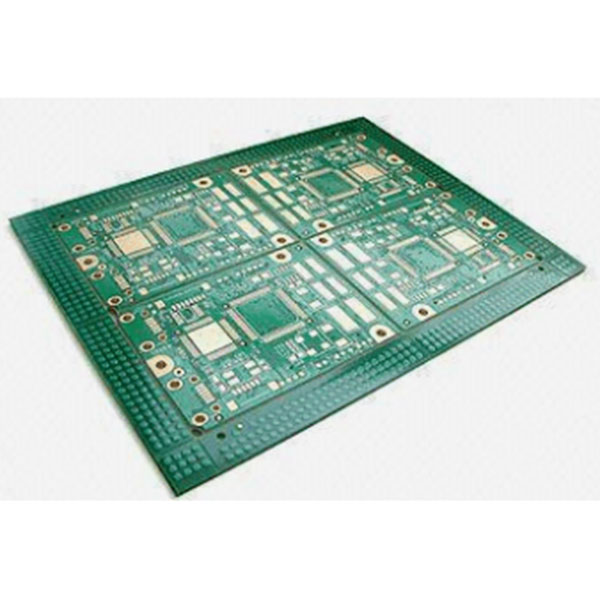
PC film is widely deployed as a dielectric substrate in flexible printed circuits (FPC), membrane switches, and touch-panel overlays. Its outstanding dimensional stability under thermal cycling ensures that fine-pitch circuitry maintains registration accuracy. In consumer devices such as laptops, tablets, and wearables, PC sheet forms structural chassis components and transparent display covers — leveraging its 89% light transmittance and 600 J/m impact resistance to replace glass in impact-prone designs.
2. New Energy — EV Battery Systems & Solar
The electric vehicle revolution is one of the most significant demand drivers for flame-retardant polycarbonate film. PC film serves as cell-to-cell electrical insulation within lithium-ion battery packs, requiring UL94 V-0 performance, precise thickness tolerances (±2 µm), and long-term chemical resistance to electrolyte vapors. In photovoltaic (PV) panel backsheets, multi-layer PC-based laminates provide superior UV stability and moisture barrier performance compared to traditional PET composites, extending module lifespans beyond 25 years.
3. 5G Telecommunications Infrastructure
5G antenna radomes and base-station housing panels increasingly incorporate PC sheet for its low dielectric constant (Dk ≈ 2.9) and low dissipation factor (Df ≈ 0.0008), which minimize signal attenuation at millimeter-wave frequencies. The ability to precision-mold PC sheet into complex aerodynamic radome profiles without sacrificing RF transparency makes it the material of choice for both macro-cell and small-cell 5G deployments.
4. Automotive & Rail Transportation
PC sheet for automotive glazing — side windows, sunroofs, and panoramic roofs — is gaining market share versus traditional laminated glass, offering up to 50% weight savings critical for EV range optimization. Interior PC film is used in instrument cluster overlays, HUD (Head-Up Display) substrates, and door trim decorative laminates. In rail transportation, EMT supplies flame-retardant PC sheets meeting EN 45545-2 (railway fire protection), supporting the global expansion of high-speed rail networks.
5. Medical Devices & Healthcare Packaging
Medical-grade polycarbonate film is certified for gamma-ray and EtO sterilization compatibility, making it essential for blister packaging of disposable instruments, diagnostic cartridge windows, and wearable biosensor encapsulants. The material's biological inertness and chemical resistance to hospital-grade disinfectants ensure patient safety across its service life.
6. Smart Buildings & Architectural Glazing
Multiwall and corrugated PC sheet systems are transforming commercial architecture, offering up to 200× the impact resistance of glass with 50% better thermal insulation (U-value as low as 1.1 W/m²K in 40 mm multiwall configurations). Applications include skylights, atrium roofing, façade cladding, sound barriers along highways and rail lines, and greenhouse covers for precision agriculture. Photochromic and electrochromic-coated PC glazing panels are emerging as smart window solutions in green building design.
7. Aerospace & Defense
Aerospace-qualified polycarbonate sheet (per MIL-PRF-25690) is standard for aircraft cabin windows, cockpit canopies in light aircraft, and protective visors in military helmets. The combination of ballistic-resistance, optical distortion-free clarity, and low-temperature impact toughness (to –65°C) satisfies extreme service conditions that no other transparent polymer can match at equivalent thickness.
Emerging Trends in Polycarbonate Film & Sheet Technology
The PC film and sheet industry is undergoing rapid transformation driven by sustainability mandates, miniaturization, and performance escalation.
Halogen-Free Flame Retardancy
Stricter global environmental legislation is phasing out brominated and chlorinated flame retardants. Halogen-free PC grades using phosphorus-based or inorganic additives now represent the fastest-growing segment, driven by EV, 5G, and consumer electronics OEMs demanding RoHS-compliant supply chains.
Bio-based & Recycled PC
Leading polymer producers are commercializing bio-BPA-derived polycarbonate and chemical-recycling routes (glycolysis, methanolysis) to recover monomers from post-consumer PC scrap. This circular economy approach targets automotive and electronics sectors with stringent carbon-footprint disclosure requirements.
Nano-Composite PC Films
Integration of graphene nanoplatelets, nano-clay, and CNT reinforcements into PC matrices is enabling next-generation films with enhanced barrier properties, EMI shielding effectiveness (>60 dB at 1 GHz), and improved scratch hardness — without sacrificing optical transparency or processability.
Ultrathin PC Dielectric Films
As power electronics miniaturize, demand for sub-50 µm PC dielectric films with breakdown voltages exceeding 300 V/µm is accelerating. These films serve capacitor and insulation applications in inverters, chargers, and high-frequency power modules for EVs and industrial automation.
Functional Coatings on PC Sheet
Advanced hard-coat, anti-reflective (AR), anti-fog, and self-cleaning coatings are extending the outdoor durability of PC sheet to 20+ years UV exposure. Photocatalytic TiO2 coatings and smart electrochromic layers are creating new value in architectural and automotive glazing segments.
AI-Driven Process Optimization
Manufacturers like EMT are integrating AI-powered inline quality inspection (machine vision + deep learning) and digital-twin process modeling to achieve thickness tolerances of ±1 µm and zero-defect production targets — critical for optical and electronics-grade PC film customers.
In-Depth Application Scenario Analysis
Understanding how polycarbonate film and sheet solve real engineering challenges across critical industries.
EV Battery Pack Insulation
In a 100 kWh EV battery pack containing ~6,000 cylindrical cells, PC insulation film must simultaneously provide 3 kV dielectric withstand, resist electrolyte exposure for 10+ years, and maintain dimensional stability across –40°C to +85°C thermal cycling. EMT's halogen-free PC film with 0.05 mm precision meets all these demands in a single-material solution, replacing multi-layer tape laminates and simplifying pack assembly.
5G mmWave Antenna Radomes
Millimeter-wave 5G signals (24–86 GHz) are highly sensitive to dielectric loss. PC sheet at 3 mm thickness achieves insertion loss of <0.3 dB across the 28 GHz band while providing IP67-rated weather sealing and –40 to +85°C operational range for outdoor base-station deployments, enabling network operators to achieve consistently high data throughput regardless of climate conditions.
Flexible Electronics & Foldable Displays
Ultra-thin (25–75 µm) PC film serves as the flexible substrate in next-generation foldable smartphone displays and e-paper devices. Its combination of 89% transmittance,
Railway & Transit Interior Panels
High-speed rail operators specify PC sheet for interior ceiling panels, partition walls, and window surrounds under EN 45545-2 HL3 fire classification (the most stringent). PC's inherent self-extinguishing behavior, low smoke toxicity index, and ability to be thermoformed into compound-curved interior shapes allow train manufacturers to meet both safety and aesthetic design requirements simultaneously.
Smart Grid & UHV Power Equipment
In ultra-high-voltage (UHV) transformer and switchgear applications, PC-based composite insulation sheet provides the combination of high dielectric strength (>20 kV/mm), excellent thermal class (class B/F), and mechanical robustness needed to protect critical power infrastructure. EMT's decades of expertise in electrical insulation materials — dating from its origins as China's first public insulation material manufacturer — underpins its leadership in this specialized segment.
Medical Diagnostic Devices
Point-of-care (POC) diagnostic cartridges for blood analysis and pathogen detection rely on optical-grade PC film for their microfluidic channels and detection windows. PC's biocompatibility (ISO 10993), gamma-sterilization stability (no yellowing below 50 kGy), and compatibility with injection-molding allow cost-effective mass production of disposable diagnostic platforms that are transforming healthcare accessibility globally.
Polycarbonate Film & Sheet — Market at a Glance
About Sichuan EM Technology Co., Ltd.
Sichuan EM Technology Co., Ltd., established in 1966 and headquartered in Mianyang, Sichuan, south-west part of China, as the 1st public company of electrical insulation material manufacturer in China and National Insulation Material Engineering Technical Research Center, we have comprehensive R&D and manufacturing capabilities to manufacture polyester films, halogen-free polycarbonate and polypropylene films, capacitor polypropylene films, rigid & flexible laminates, mica tapes, thermosetting composites, precision coating product, molding compounds (DMC, SMC), functional PET chips (FR PET chip, anti-bacterial PET chip, etc.), impregnating varnishes and wire enamels, PVB resin & interlayers, special resin (esp. for CCL), etc. We are certified by ISO9001, IATF16949:2016, ISO10012, OHSAS18001 and ISO14001.
We export to the worldwide markets in varied industries, including power generation equipment, UHV power transmission, smart grid, new energy, rail transportation, consumer electronics, 5G communication, and panel display. EMT has established long-term and stable cooperative partnerships with all our partners across the world, whilst providing strong supports in manufacturing services to original equipment manufacturers (OEMs).

Our Vision & Mission
Milestone
Over five decades of continuous innovation, expansion, and leadership in advanced materials manufacturing.
Manufacturing Sites
Strategically distributed production and R&D bases ensuring supply chain resilience and rapid customer response.


Chengdu Site — Advanced coating and functional film production hub.
Mianyang Secondary Site — Expanded capacity for polycarbonate and polyester films.
Sichuan EMT New Material — Specialty composites and laminates manufacturing.
Central China Site (Henan) — Serving automotive and rail transport OEMs in Central China.
Eastern China Site (Jiangsu) — Electronics and consumer device supply chain proximity.
Shandong Dongrun New Material — Specialty resin and functional material production.
Shandong EMT New Material — High-performance film and sheet for North China markets.
SNTON Optical Material — Optical-grade film substrates for display and photonics.
Corporate Structure
A diversified new materials group spanning specialty films, resins, composites, pharmaceuticals, and aviation equipment.
- Sichuan Dongfang Insulation Material Co., Ltd.
- Sichuan EMT New Material Co., Ltd.
- Jiangsu EMT New Material Co., Ltd.
- Shandong Shengtong Optical Materials Technology Co., Ltd.
- EMT Chengdu New Materials Technology Co., Ltd.
- Chengdu D&C Pharma. Technology Co., Ltd.
- Sichuan EMT Aviation Equipment Co., Ltd.
- Henan Huajia New Material Technology Co., Ltd.
- Shandong EMT New Material Co., Ltd.
- Shandong Dongrun New Material Co., Ltd.
- Sichuan EM Functional Film Materials & Technology Co., Ltd.
- Sichuan EM Technology (Chengdu) International Trading Co., Ltd.
More Polycarbonate Film / Sheet Application Solutions
Comprehensive product portfolio covering all key application scenarios in electronics, energy, optics, and industrial manufacturing.